

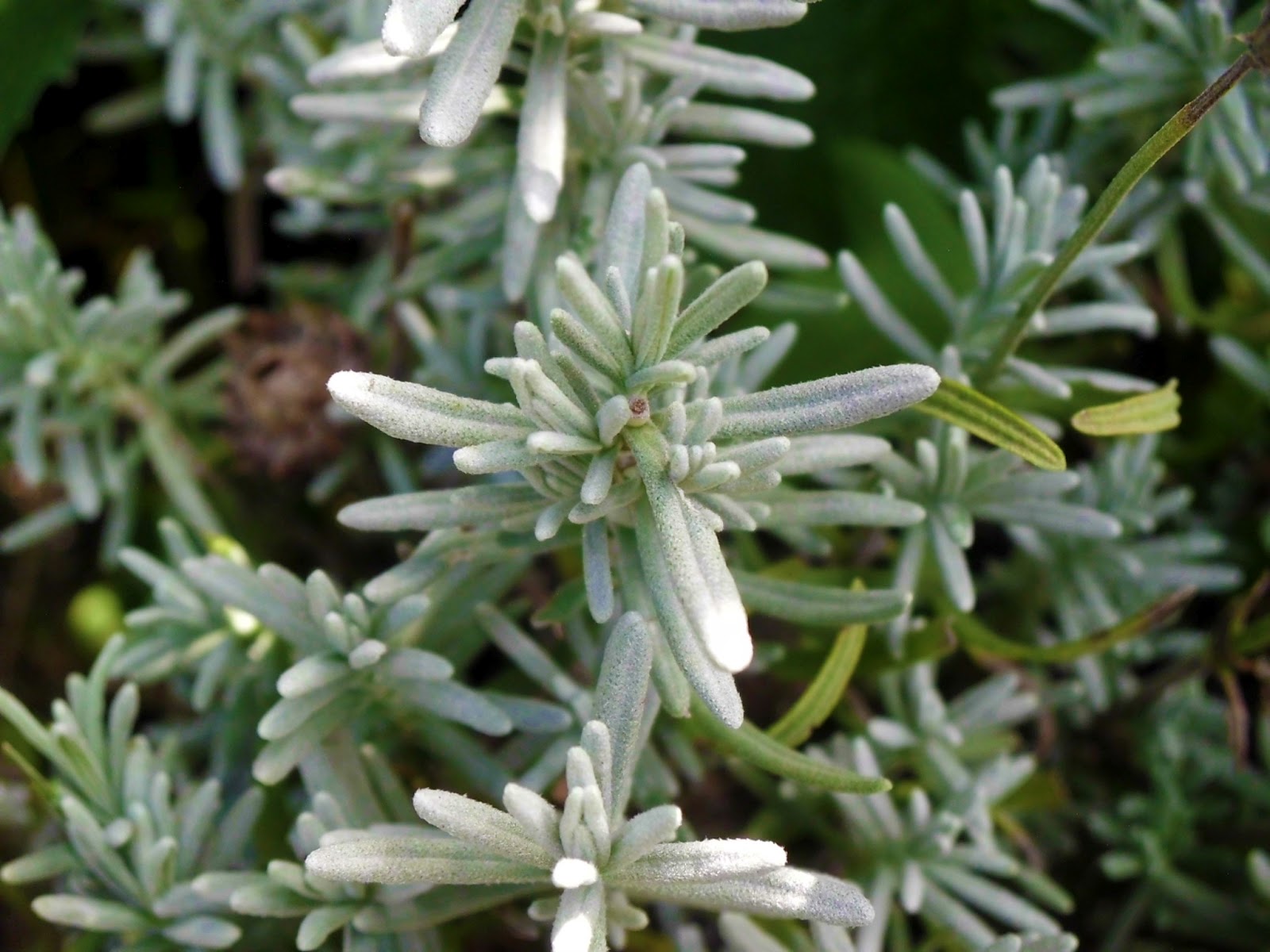
Lavender; it just isn't an herb garden, (or should I say a garden), without it. It's gorgeous gray foliage, beautiful purple blue buds and flowers and it's irresistibly delicious scent make it one garden plant that leaves you coming back for more!
 |
| Photo credit |
And that's where I come in. I have this beautiful lavender hidcote plant, (well, it WAS beautiful this past spring!) a smaller variety of lavender that makes it perfect for walkways or borders.

The problem began when its neighbors, echinacea or purple coneflower, notorious for its abundance of progeny...aka a self-sower, began to infringe upon the lavender's territory. I also planted the lavender on the side of the flower bed where it didn't get all the full sun that this Mediterranean plant really loves. SO, finding I had an open space in one of my flower beds on the south side of my house, I decided that I will transplant this little guy. But, the empty space I have is pretty big and these plants stay relatively compact, so I really need some more. But I don't want to buy them...so what to do? Make some more!
And that's why you're reading this. Luckily, it's super easy to make your own lavender plants, or thyme plants, or any woody, low growing plant for that matter. All you need is a sharp knife, a rock and with any type of gardening, patience. But I am willing to wait...no problem. This is the best kind of planting because it's so easy.
This technique is called "layering" and it's been around for a long time. This really should be done in the spring, but I'm taking my chances with the nice weather we've been having and doing this in late summer. Hopefully I'll have my little plants and be able to plant them in the spring. I would suggest at least a few good months of frost-free weather before doing this to give the new plants time to root. Otherwise, you can plan this for your spring garden.

So, first of all, locate a woody low growing branch(s) of the plant.

Take a sharp knife and nick the bark being careful not to cut all the way through the stem...

Now, if you have rooting hormone, then apply that to the cut area of the branch. I didn't have any so I just went ahead with the next step. The rooting hormone is nice insurance that the plants will root, but I've made plenty of plants without it.

This step is important, make sure the nicked part is thoroughly covered...

Find a handy large rock and place over the buried branch area. It's SO important for the branch to make good contact with the soil.

I made several of these cuttings and found another rock. So my plant looks like this with the prospective new plants on the sides.

One more close up. I made several cuttings and used one large rock to cover them all. That's it, wal-ah! Now, isn't that the easiest gardening you've ever done? I check it periodically to make sure the branch stays buried but the rest is up to time. I'll check it again late next spring. I'll know if the new plants made it by pulling on them gently and the branch doesn't move. Then you know they've formed their own roots. Then, you can cut the original branch and carefully dig out the plant and locate where you want it!
I've used this method different times, especially with thyme plants. Sometimes the plants just layer themselves and I will transplant these new little freebies to their new home. You've gotta love it and any kind of gardening that's easy is a true bonus!
So there ya go, layer your plants away and multiply your garden, make them as gifts for your friends (my plant was from a friend). Pin this article and you'll have a great technique for the spring all ready to go...blessings!!
Linked to these blog hops....Homestead Barn Hop , Tuesday's Living Green , Take-A-Look Tuesdays , Take it From Me Tuesdays , Frugal Days, Sustainable Ways , Simple Lives Thursday ,The Chicken Chick , Backyard Farming Connection Hop
